The Complete Free Guide to Specialized Hauling: Hazmat, Tanker, and Oversize Loads
For many truck drivers, "dry van" is just the beginning. While hauling standard freight is the backbone of the industry, specialized hauling offers a path toward higher earnings, more challenging work, and a prestigious reputation in the trucking community. Whether you are navigating a 150-foot "superload" through a narrow intersection or securing liquid chemicals in a shiny tanker, specialized hauling requires a different level of expertise.
Jump to Section
Understanding Hazmat Hauling
Hazardous Materials (Hazmat) hauling involves the transportation of substances that pose a risk to health, safety, and property. This category includes everything from common items like paint and batteries to highly dangerous materials like explosives, radioactive waste, and flammable gases.
The Responsibility: When you haul Hazmat, you are not just a driver; you are a safety officer on wheels. You must be intimately familiar with the 49 CFR (Code of Federal Regulations), which dictates how materials are labeled, documented, and loaded.
- Placarding: You must ensure the correct placards are displayed on all four sides of the trailer.
- Shipping Papers: These must be within reach at all times, detailing exactly what is being hauled and how to handle a spill.
- Route Restrictions: Many cities and tunnels prohibit Hazmat loads, requiring meticulous pre-trip planning.
Mastering Tanker Operations
Tanker trucking is often described as "hauling a living thing." Because liquids move, the dynamics of the truck change constantly during transit.
The primary challenge in tanker hauling is liquid surge. When you stop, the liquid slams against the front of the tank. When you accelerate, it rushes to the back. This "slosh" can literally push a truck through an intersection or cause a rollover on a curve if not managed correctly.
Key Tanker Safety Tips:
- Increased Following Distance: You need more time to react to the surge of the liquid.
- Smooth Transitions: Braking and accelerating must be gradual to minimize the movement of the cargo.
- High Center of Gravity: Tankers are prone to tip; speeds on exit ramps should be well below the posted limit.
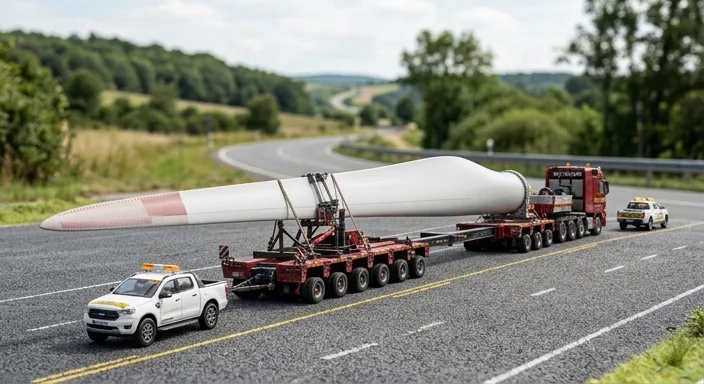
Navigating Oversize and Overweight Loads
Oversize/Overweight (OSOW) loads involve freight that exceeds standard legal dimensions (usually 8.5 feet wide, 13.5 feet high, or 80,000 lbs total weight). This could include construction equipment, pre-fab houses, or industrial boilers.
The Logistics: Hauling OSOW is a team effort. It often requires:
- Pilot/Escort Vehicles: Cars that drive ahead or behind to warn traffic and check for overhead obstacles.
- Route Surveys: Physical checks of the route to ensure the load can fit under every bridge and around every corner.
- Permits: Every state you pass through requires a specific permit detailing the exact roads you are allowed to travel on.
Compliance and Safety Regulations
The Federal Motor Carrier Safety Administration (FMCSA) maintains strict oversight on specialized hauling. Failure to comply can lead to massive fines, loss of endorsements, or carrier shutdowns.
For Hazmat, you must undergo a TSA background check and fingerprinting. For Oversize loads, you must adhere to "curfew" times—many states prohibit moving large loads during rush hour or after dark. Understanding these nuances is what separates a professional specialized driver from a standard CDL holder.
The Financial Rewards of Specialization
Why go through the extra hassle? The answer is simple: Money. Specialized drivers typically earn 20% to 50% more than dry van drivers. Because the risk is higher and the skill set is rarer, carriers are willing to pay a premium. Additionally, specialized hauling is often "recession-proof"—infrastructure projects and chemical manufacturing continue even when consumer goods shipments slow down.
How to Get Specialized Endorsements
- Tanker (N): Requires passing a written knowledge test at the DMV.
- Hazmat (H): Requires a written test, a TSA background check, and a fingerprinting process.
- Combination (X): This endorsement covers both Tanker and Hazmat.
- Oversize: There is no specific CDL endorsement for oversize, but most companies require years of flatbed experience and specialized training provided by the carrier.
Frequently Asked Questions
Most veteran drivers agree that liquid tankers without baffles (smooth bores) are the most difficult because the liquid surge is uninhibited, making the truck very unstable during movement.
Typically, the Hazmat endorsement must be renewed every five years, which includes a new background check and retaking the written knowledge test.
While many pay by the mile, many OSOW drivers also receive "escort pay" or flat rates for specific complex moves, often resulting in much higher take-home pay than standard mileage rates.